In the blink of an eye, a star traces a fiery path across the vault of the sky, and a deer, running, disappears into the forest. In a universe in which those parts that are visible and those that are not visible to the eyes are constantly appearing and disappearing, painting, on a first level, is an affirmation of the mystery that surrounds us. Without “disappearance”, perhaps there would have been no reason for human beings to paint and thus affirm their world as something that exists.
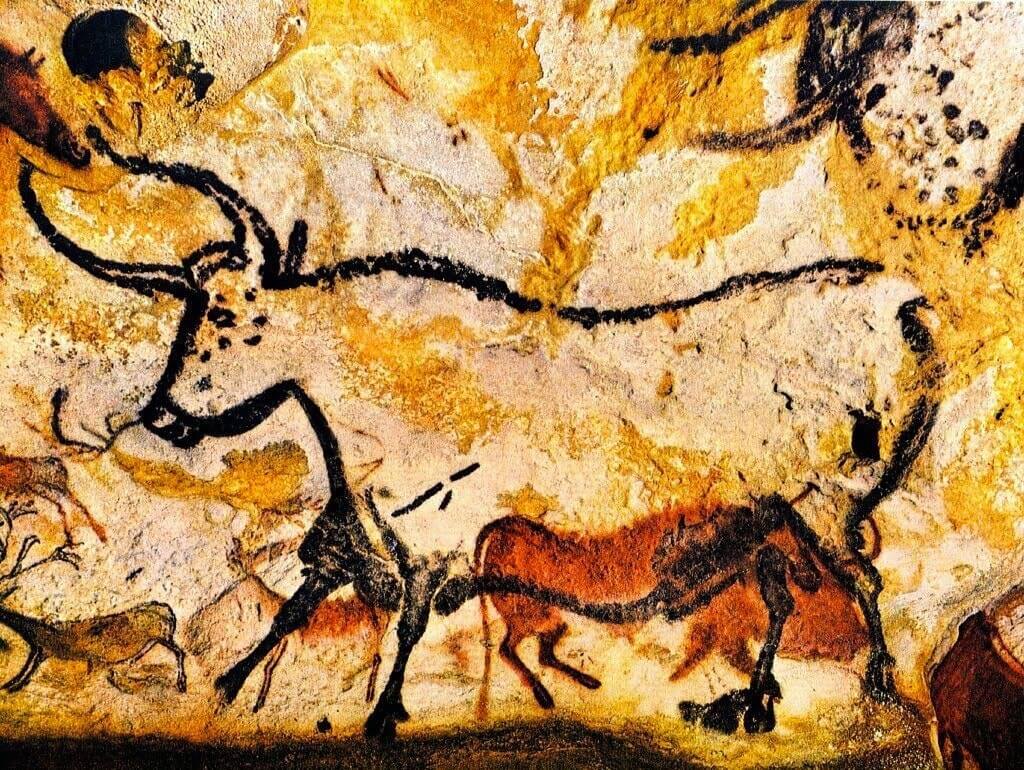
Thousands of years have passed since the Palaeolithic painters and engravers fashioned, upon the “broad seas” of caves and rocks, their wondrous representations of animals and strange beings. Painting, it seems, did not begin clumsily, nor was its evolution linear. The toss of the horse’s neck, the contractions of its muscles, its expressiveness, bear witness to the incomparable skill and subtlety of perception of the cave painter: a human being who did not know the uncertainty and awkwardness of his later fellow artists, whose hand moved with assurance through a natural space, revealing the forms of beings out of the darkness.
The lives of these painters were bound to an intimate knowledge of animals and of the natural environment through hunting and nomadic life. Yet there is something more than this: “something mysterious” that whispers in the hearts of human beings and makes them beat more vividly when they behold the painted images in the caves of Lascaux, Chauvet and Altamira, the rock paintings of the Bushmen, and those of other sacred places throughout the world. This “something” is the empty space within which the process of Creation of the painted images and the ritual were conceived; it is the Space of Manifestation of Vibration, within which the painter truly feels himself to be a receiver rather than a creator, recognising Creation at a third point outside himself and, at the very same moment, within himself.